
Tuesday, March 31, 2026
Tertullian (extra credit)

Athenagoras (extra credit)

Justin Martyr (extra credit)

Eusebius Book X
 Eusebius' final pages are among the most optimistic in all of historical literature. Why is Eusebius so positive and so hopeful about the future? In particular, why is he so positive about Constantine? What is Constantine doing that makes Eusebius feel that the Roman world is exactly on the right track? Do you feel Eusebius is missing anything here?
Deuterocanonicals (extra credit)
 Please read through a portion (one or two chapters is enough) of any of the Deuterocanonical books (the books included in Catholic and Greek Orthodox Bibles, but not usually included in Protestant Bibles). I recommend especially Ecclesiasticus (Sirach), but the other books are worth looking at as well.
Note what you find particularly interesting in the selection you read. Would you ever read through the Deuterocanonicals on your own? Why, or why not?
If you have fallen behind on the blogs, you meet do additional entries on other Deuterocanonical books. [Please note: the link I give here has a pretty idiosyncratic list of the Apocrypha. "Bel and the Dragon" and "Susannah" are usually just called "additions to Daniel" and that's where you will find them in most Catholic Bibles.]
New Testament Apocrypha (extra credit)
 The Early Christian Writers site includes most of the New Testament Apocrypha (pseudepigraphal works that Eusebius would have called "really spurious") and the works of the men who came to be called the Apostolic Fathers (books accepted by the church as orthodox in doctrine, though not authoritative).
Please choose either one of the Apocryphal books or the Apostolic Fathers (the first nine on the link here). What is your evaluation of this book? Is it a book to die for? Does it seem to you useful and/or interesting? Or is it a book you wouldn't mind seeing burned by government officials? Why?
If you have fallen behind on the blogs, you may do multiple entries for extra credit here.
If you have fallen behind on the blogs, you may do multiple entries for extra credit here.
Eusebius Book VII (extra credit)
 In Book 7 of his History of the Church, Eusebius discusses several figures whom he regarded as heretics, among them Paul of Samosata, Sabellius, and Novatian (whom he calls Novatus). Do you agree with Eusebius' evaluation of these men? Are they truly heretics? If so, is false doctrine the central problem, or does something else seem to be involved? What techniques does the church seem to be using in dealing with the divisions caused by such men? Does the "surgery" in each case seem successful or not?
Eusebius Books IV and V
 Like any historian, Eusebius is only as good as his sources. When it comes to 2nd century persecutions, his sources are sometimes excellent (e.g., Justin Martyr) and sometimes not quite as reliable. Nevertheless, while one might question some of the details he includes, Eusebius is an excellent source for understanding the reasons Christians were persecuted and the reasons Christianity was able to grow despite the persecutions.
Read through some of the martyrdom sections in Books IV and V of Eusebius' History of the Church. Sections you might find particularly useful are 4:14-17 (which includes an account of the martyrdom of Polycarp) and 5:1-3 (which includes the martyrdom of Blandina).
What do you find in these sections that helps explain Roman persecution of the Christians or helps explain the perseverance of the Christians despite the persecutions?
Eusebius--Book III
 Please read Book III of his History of the Church. What do you see in this book that would be particularly worth adding to an essay on the strengths/weaknesses of Eusebius as a historian? Was there anything you found particularly interesting in this book?
Eusebius Books I and II
 Final Exam Study Question I asks you to talk about the strengths and weaknesses of Eusebius as a historian. We'll eventually be reading through much of his Church History, so, if you do the readings, you'll have a fairly easy time with the question.
I would appreciate it if you would skim the first two books (not chapters) of Eusebius of Caesarea's History of the Church for Thursday class (April 2). Read more carefully the first two pages and a few passages that particularly get your attention.
In my view, a good history should be interesting. Do Books I and II meet this standard? What do you find interesting in these books? Does Eusebius ever lose your attention? If so, why?
Please bring the Eusebius book to class with you for the next several sessions.
Wednesday, March 11, 2026
Revelation (Discussion II)
 For Thursday, March 26, please read Revelation 13-22, concentrating on the last four chapters. Take a passage and note whether the preterit, historical, futurist, or allegorical interpretation seems to work best in that case.
Alternative assignment: Cite a couple of verses from this section that show particularly well the beauties of this book or that show how difficult the book is to understand and interpret.
Revelation--Discussion I
 Please read the first 12 chapters of Revelation for Tuesday, March 24. class. Concentrating on the first five chapters would work, but it's better if you you read all 12 chapters.
Do you find Revelation a difficult book? A beautiful book? Something of both? Cite a verse or two from the first 12 chapters that shows particularly well either the beautiful side or Revelation or the difficult side of the book.
Tuesday, March 3, 2026
I Peter
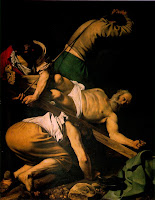 None of us likes the feeling that we have failed at something, but, sooner or later, all of us seem to fail--and sometimes we feel like we have failed the really big test: life itself.
Peter certainly could understand the feeling that one is a failure: it was a feeling he sometimes shared. In I Peter, however, he provides us with a recipe for true success in life.
Please read through all of I Peter. Cite below a verse or two that seem to you to be particularly good examples of Peter's advice for success in life. Explain why you chose these particular verses.
James
 Please read my list of study questions on the Epistle of James (the first nine questions on the link here), and then James itself. Suggest an answer to one or two of the study questions and cite or two a verse from James in support of your answer.
Ephesians
 Please read all of Ephesians. Choose one of the questions below and select a verse that particular helps in answering that question. Please explain your choice.
1. What seem to be the most import ethical challenges the Ephesian Christians are facing?
2. In what ways does Ephesians seem different than Romans and I Corinthians?
3. What specific standards does Paul set for servants, masters, children, wives, and husbands? Is he right is saying that the husband is the “head” of the wife? How do Paul’s ideas differ from those of contemporary society?
4. What is Paul’s advice to leaders on handling ethical problems?
Subscribe to:
Comments (Atom)