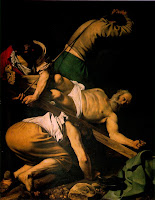
 None of us likes the feeling that we have failed at something, but, sooner or later, all of us seem to fail--and sometimes we feel like we have failed the really big test: life itself.
Peter certainly could understand the feeling that one is a failure: it was a feeling he sometimes shared. In I Peter, however, he provides us with a recipe for true success in life.
Please read through all of I Peter. Cite below a verse or two that seem to you to be particularly good examples of Peter's advice for success in life. Explain why you chose these particular verses.

What stood out to me personally was 1 Peter 4:8 which says, "Most of all, love one another deeply. Love erases many sins by forgiving them."
ReplyDeleteWe obviously fail because we are imperfect beings. What feels like a recipe for success from 1 Peter was this verse because it shows how if you have this agape love, that this action erases many sins by forgiving them. This helps build this feeling that when we can truly love others how Jesus loves us, we have even more freedom to find true success in our own lives.
I liked verses 13-16 of chapter 3, particularly verse 15: "but in your hearts honor Christ the Lord as holy, always being prepared to make a defense to anyone who asks you for a reason for the hope that is in you; yet do it with gentleness and respect." I'm sure much of what Peter writes in this book is coming from hard-learned lessons, but I can't help but think he maybe recalled his denial of Jesus in the garden when writing this advice specifically. Earlier, in chapter 2, Peter reminds the audience of Jesus serving as the cast-out cornerstone, the foundation of our faith. Therefore, we should be able to have a clear explanation to those around us as to why we have faith in the one who was rejected, which must have been especially important to those who lived within decades of the crucifixion happening. This still holds immense importance nowadays too. Not only would we be able to solidly make a case for our faith - whether to the genuinely curious or deceitfully malicious - but also we would have practiced and well-thought-out assurance in our own lives. When - not if - things get difficult or when we fail, we can remind ourselves of why and who we have our hope in.
ReplyDelete1 Peter 4:1-7 gives a very good recipe for success, especially verse 7 (and 8), which says, "The end of all things is at hand; therefore be self-controlled and sober-minded for the sake of your prayers. Above all, keep loving one another earnestly, since love covers a multitude of sins."
ReplyDeletePeter outlines being self-controlled, sober-minded, and to love, much like how Paul continued to simplify his theological discussions by encouraging the early churches to love. The idea that self-control is necessary for success in life is prominent for financial success, familial success, and much else. Ultimately, this self-control Peter speaks about is directed at a spiritual self-control which, when we lack and inevitably fall into sin, Peter has the solution for that too - love. This pairs well with Paul's love chapter in 1 Corinthians, that no spiritual gift is useful, nor is there success and fulfillment without love.
1 Peter 3:15
ReplyDelete15 but in your hearts honor Christ the Lord as holy, always being prepared to make a defense to anyone who asks you for a reason for the hope that is in you; yet do it with gentleness and respect,
Even if someone isn't a Christian this is a good principle to live by. So many people go about their life without asking the big questions. What and why do I believe something. We should have reason and an explanation for why we live the way we do. If we don't know why we do what we do then we will live aimlessly and it total chaos. Then also sharing with gentleness and respect is crucial and reduces hostility.
1 Peter 5:2-3 seems to be a very good piece of advice for elders in particular, and also has principles that can be learned by everyone who ends up in a leadership role.
ReplyDelete"Shepherd the flock of God among you, exercising oversight not under compulsion, but voluntarily, according to the will of God; and not for sordid gain, but with eagerness; nor yet as lording it over those allotted to your charge, but proving to be examples to the flock" (NASB).
I think this is good advice for keeping your eldership. Elders must be good examples, and they must not be prideful. We are all ultimately under God, not under the elders. Yes, God had placed elders in authority, but that authority is from God, and is not due to any supreme right of their own to tell others what to do.
The people will want to follow a leader who follows these instructions laid out by Peter, and it that way, everything may work out peacefully, but the reverse scenario leads to conflict, or depending on the situation, could descend into a cult-like situation.
I can think of a few different leaders who have a large following of people who hang on their every word, even as they stray from scripture and sound theology. This is not good for anyone. It is not good for the followers, and even if they profit monetarily, it is not good for the leaders either.
But think of how good it could be following 1 Peter: elders eager to be good examples, guiding others to help them, not to control them by force, doing all things according to the will of God that they may grow in relationship with Him.
1peter 5:6-76 Humble yourselves, therefore, under God’s mighty hand, that he may lift you up in due time. 7 Cast all your anxiety on him because he cares for you.
ReplyDeleteI chose these verses because they seem like some good advice to have. The first one to be humble. This is to keep our egos in check. They other one to not worry because it is in the lords hands.
I liked verse 2:12. I think it's good advice to mind your behavior. This way when people try to talk bad about you, they have nothing to say.
ReplyDeleteI think that 5:2-3 demonstrates good qualities for leaders in general. People who lead should do so willingly not under compulsion, not do so for their own gain, and as examples. My favorite managers have always had these qualities, and I think that these serve as a good guide for people that are placed in positions of authority.
1 Peter 2:12 "maintain good conduct among the Gentiles, so that if they speak of you as evildoers, they may observe your good works and glorify God on the day of visitation."
ReplyDeleteThis is proof that Peter has come far in his ministry. For example, after Jesus's death, he struggles with the Gentiles in Galatians (2:11-14). Paul condemns Peter for his inconsistency in his actions versus his words. In Acts, Peter says that the message is for everyone, but then he would not sit with the Gentiles. Now he is reforming his ways by articulating that works follow faith. He articulates the opposite of what he used to believe and now shows his strong leadership.
I feel like 1 Peter 2:13-14 is a good passage that illustrates some of Peter's advice about having success. Peter tells us to respect and submit to the authorities over us, whether it be an emperor in Peter's time or the bureaucratic mess that is the United States Government. Peter follows this up in verse 15 when he tells us that when we do good and respect and submit to the authorities, we silence the ignorant people that seek for any faults in our lives.
ReplyDeleteThis passage echoes back to when Jesus told us to render to Caesar what is Caesar's, and render to God what is Gods. God has placed the authorities in their positions for His own reasons, and by submitting to the authorities, we are in a way submitting to God, since He's the one who placed them there.
“Humble yourselves, therefore, under God’s mighty hand, that he may lift you up in due time. Cast all your anxiety on him because he cares for you.”
ReplyDeleteI chose this one because hes clearly telling you to put your trust in god and he will help you with everything. If you put faith into him he will help you get through it with trust and faith.
One bible verse that I found in 1 Peter that is good advice for success in life is in chapter 4 verse 10 “Each of you should use whatever gift you have received to serve others, as faithful stewards of God’s grace in its various forms.” The reason I chose this verse is because Peter is pointing out that everyone is giving gifts from God and it is our duty to use these gifts to honor God. - Joseph
ReplyDelete