
Tuesday, March 31, 2026
Tertullian (extra credit)

Athenagoras (extra credit)

Justin Martyr (extra credit)

Eusebius Book X
 Eusebius' final pages are among the most optimistic in all of historical literature. Why is Eusebius so positive and so hopeful about the future? In particular, why is he so positive about Constantine? What is Constantine doing that makes Eusebius feel that the Roman world is exactly on the right track? Do you feel Eusebius is missing anything here?
Deuterocanonicals (extra credit)
 Please read through a portion (one or two chapters is enough) of any of the Deuterocanonical books (the books included in Catholic and Greek Orthodox Bibles, but not usually included in Protestant Bibles). I recommend especially Ecclesiasticus (Sirach), but the other books are worth looking at as well.
Note what you find particularly interesting in the selection you read. Would you ever read through the Deuterocanonicals on your own? Why, or why not?
If you have fallen behind on the blogs, you meet do additional entries on other Deuterocanonical books. [Please note: the link I give here has a pretty idiosyncratic list of the Apocrypha. "Bel and the Dragon" and "Susannah" are usually just called "additions to Daniel" and that's where you will find them in most Catholic Bibles.]
New Testament Apocrypha (extra credit)
 The Early Christian Writers site includes most of the New Testament Apocrypha (pseudepigraphal works that Eusebius would have called "really spurious") and the works of the men who came to be called the Apostolic Fathers (books accepted by the church as orthodox in doctrine, though not authoritative).
Please choose either one of the Apocryphal books or the Apostolic Fathers (the first nine on the link here). What is your evaluation of this book? Is it a book to die for? Does it seem to you useful and/or interesting? Or is it a book you wouldn't mind seeing burned by government officials? Why?
If you have fallen behind on the blogs, you may do multiple entries for extra credit here.
If you have fallen behind on the blogs, you may do multiple entries for extra credit here.
Eusebius Book VII (extra credit)
 In Book 7 of his History of the Church, Eusebius discusses several figures whom he regarded as heretics, among them Paul of Samosata, Sabellius, and Novatian (whom he calls Novatus). Do you agree with Eusebius' evaluation of these men? Are they truly heretics? If so, is false doctrine the central problem, or does something else seem to be involved? What techniques does the church seem to be using in dealing with the divisions caused by such men? Does the "surgery" in each case seem successful or not?
Eusebius Books IV and V
 Like any historian, Eusebius is only as good as his sources. When it comes to 2nd century persecutions, his sources are sometimes excellent (e.g., Justin Martyr) and sometimes not quite as reliable. Nevertheless, while one might question some of the details he includes, Eusebius is an excellent source for understanding the reasons Christians were persecuted and the reasons Christianity was able to grow despite the persecutions.
Read through some of the martyrdom sections in Books IV and V of Eusebius' History of the Church. Sections you might find particularly useful are 4:14-17 (which includes an account of the martyrdom of Polycarp) and 5:1-3 (which includes the martyrdom of Blandina).
What do you find in these sections that helps explain Roman persecution of the Christians or helps explain the perseverance of the Christians despite the persecutions?
Eusebius--Book III
 Please read Book III of his History of the Church. What do you see in this book that would be particularly worth adding to an essay on the strengths/weaknesses of Eusebius as a historian? Was there anything you found particularly interesting in this book?
Eusebius Books I and II
 Final Exam Study Question I asks you to talk about the strengths and weaknesses of Eusebius as a historian. We'll eventually be reading through much of his Church History, so, if you do the readings, you'll have a fairly easy time with the question.
I would appreciate it if you would skim the first two books (not chapters) of Eusebius of Caesarea's History of the Church for Thursday class (April 2). Read more carefully the first two pages and a few passages that particularly get your attention.
In my view, a good history should be interesting. Do Books I and II meet this standard? What do you find interesting in these books? Does Eusebius ever lose your attention? If so, why?
Please bring the Eusebius book to class with you for the next several sessions.
Wednesday, March 11, 2026
Revelation (Discussion II)
 For Thursday, March 26, please read Revelation 13-22, concentrating on the last four chapters. Take a passage and note whether the preterit, historical, futurist, or allegorical interpretation seems to work best in that case.
Alternative assignment: Cite a couple of verses from this section that show particularly well the beauties of this book or that show how difficult the book is to understand and interpret.
Revelation--Discussion I
 Please read the first 12 chapters of Revelation for Tuesday, March 24. class. Concentrating on the first five chapters would work, but it's better if you you read all 12 chapters.
Do you find Revelation a difficult book? A beautiful book? Something of both? Cite a verse or two from the first 12 chapters that shows particularly well either the beautiful side or Revelation or the difficult side of the book.
Tuesday, March 3, 2026
I Peter
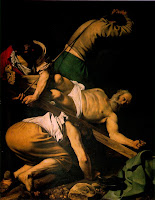 None of us likes the feeling that we have failed at something, but, sooner or later, all of us seem to fail--and sometimes we feel like we have failed the really big test: life itself.
Peter certainly could understand the feeling that one is a failure: it was a feeling he sometimes shared. In I Peter, however, he provides us with a recipe for true success in life.
Please read through all of I Peter. Cite below a verse or two that seem to you to be particularly good examples of Peter's advice for success in life. Explain why you chose these particular verses.
James
 Please read my list of study questions on the Epistle of James (the first nine questions on the link here), and then James itself. Suggest an answer to one or two of the study questions and cite or two a verse from James in support of your answer.
Ephesians
 Please read all of Ephesians. Choose one of the questions below and select a verse that particular helps in answering that question. Please explain your choice.
1. What seem to be the most import ethical challenges the Ephesian Christians are facing?
2. In what ways does Ephesians seem different than Romans and I Corinthians?
3. What specific standards does Paul set for servants, masters, children, wives, and husbands? Is he right is saying that the husband is the “head” of the wife? How do Paul’s ideas differ from those of contemporary society?
4. What is Paul’s advice to leaders on handling ethical problems?
Thursday, February 26, 2026
Jude and II Peter (extra credit)
 Please read *all* of Jude and II Peter (only four chapters total) and respond to one of the following prompts. You can do *both* prompts for extra credit, but it's easier for me if you add separate comments for each prompt.
1. Pick out one verse from Jude and one verse from II Peter that you find particularly interesting, important, or hard to understand, and comment below on what you find interesting, difficult, or important in those verses.
2. Both Jude and II Peter deal with division withing the church, division
caused by two different forms of Gnosticism. I'll be talking about
Gnosticism in some detail later in the course. For now, though, just note how Jude and Peter deal with doctrinal divisions withing the church.
Romans

Please read as much as you can of Paul's letter to the Romans. Focusing on Chapters 1-3 and 12-15 will work well.
From the chapters you read, pick out a verse or two that you think is a particularly important part of Paul's recipe for helping Jewish and gentile believers get along with one another. Cite also a verse you find particularly puzzling and explain why you find this verse hard to understand.
Alternatively, you might take a stab at explaining the verse another student found difficult/confusing or at answering one of the study questions.
Tuesday, February 24, 2026
A return to Corinth (extra credit)

I Corinthians
 For Thursday, February 26, Please read as much as you can of I Corinthians. If you are short of time, read Chapters 1-3, Chapters 6-7, and Chapters 12-13. Choose any one verse in I Corinthians you think particularly interesting, important, or hard to understand, and explain why you think this verse interesting, important, or hard to understand.
Favorite Acts Characters (extra credit)

Tuesday, February 17, 2026
Acts--Discussion II
 Please review your notes on elements helpful to the spread of a religious movement and read this summary of former class discussions elements helpful to the survival and spread of a religious movement. Then read Chapters 13-28 of Acts. Choose a verse or an incident from this section that seems to you particularly important in explaining one of those factors the class agreed might be helpful in the success of a religious movement. Explain your choice.
This might be a good time to choose your FAC I, II, III, and IV potential ID's. Remember that this is a "choose your own" ID exercise. Identify your favorite acts characters, and be ready to explain how these figures help understanding the growth of the church.
Acts of the Apostles--Discussion I
 In the introductory lecture, I noted that the main theme of this course is the investigation of one of the most important turning points in history, the transition from Pagan Rome to Christian Rome. The years right after the time of Jesus are critical in understanding that period, and that's what we'll be concentrating on for the next 1/3 of the course. The Book of Acts is a good place to start, giving us a good overview of this period.
 Please skim the first 12 chapters of Acts, then go back and read more carefully one or two chapters. Pick out three or four things in the section you read that seem to you worth discussing in class as we talk about the surprisingly rapid growth of the church. What's going on that helps the church grow? What obstacles to growth you see here?
Thursday, February 5, 2026
Gospel of John--Discussion II
 Please read Chapters 11-22 of John's gospel. As always, I prefer you read for quality rather than quantity, though, in this case, skimming through all 11 chapters and then gong back to read some chapters more carefully might work best.
Your 4th MT study question notes that, while the Gospel of John is in some ways very different from the synoptic gospels, it often complements and supplements the synoptics, sometimes in surprising ways.
Choose a verse or passage from the assigned chapters and a "parallel" verse or passage from one of the synoptics on the same subject (e.g., money, leadership, faith, etc.). Compare and contrast the two verses or passages.
A gospel "synopsis" or a harmony of the gospels can help you find parallel passages. The online synopsis I suggested you use for the earlier extra credit assignment might make this assignment a bit easier.
The Gospel of John (Discussion I)
 Please read Chapters 1-11 of John's gospel, concentrating on the first four chapters. Cite one thing John includes that *isn't* in the synoptic gospels (Matthew, Mark, and Luke).
What do you think is John's purpose in including the "extra" material? How does what John says add to or clarifify the story of Jesus as told by the Synoptic writers?
Wednesday, January 28, 2026
The Synoptic Problem (extra credit)
 Please take a look a this online Gospel synopsis here. This site allows you to easily scroll through Matthew, Mark, or Luke and find the parallel passages in the other gospels. If you clicking on the purple (Matthew), blue (Mark), or green (Luke) book icon beside the section heading, the appropriate column will automatically scroll to the parallel passage.
 Read a portion of the Gospel of Mark and a parallel passage in the Gospel of Matthew, e.g., the "plucking the grain" story in Matthew 12:1-8 and Mark 2:23-28 or the "house divided" story in Matthew 12:25-27 and Mark 3:23-30.
As your "comment," note which version of the passage (if either) seems to you to be most likely the original version? In this passage does it look like Matthew is dependent on Mark, the Mark is dependent on Matthew, or that the the two gospels are giving independent accounts? Explain your thinking.
Be not called Rabbi, Rabbi (extra credit)

Sunday, January 25, 2026
Luke--Discussion II
 Please read Chapter 13-24 of the Gospel of Luke. Look at the list of passages "special" to Luke, i.e., passages that occur in Luke's gospel only (Section VI of the outline here.). Choose one or two of these passages and speculate on why Luke chose to include this material while Matthew did not. If others have commented on this passage before you, say whether you agree with their suggestions or not.
The Gospel of Luke--Discussion 1

The Gospel of Luke has been called "the most beautiful book ever written," and it is, for many people, their favorite gospel.
Please read through my study questions on the Gospel of Luke (also attached to the syllabus for the sake of those who prefer hard copy). Then read through the first twelve chapters of Luke's Gospel.
For the blog entry here, please do *both* of the following:
1. Pick out a verse or passage that you think particularly well shows why people find this gospel attractive and explain your choice of this particular passage.
2. Choose one of the study guide questions and suggest an answer.
Please come to class ready to discuss in class the verse/passage you chose and to suggest an answer to at least one of the study guide questions.
Monday, January 19, 2026
The Gospel of Matthew (Chapter 14-28)

Please remember that, when it comes to the readings, quality reading will serve you better than quantity. Concentrating on Chapters 21-23 is just fine if you don't have time for all 14 chapters.
The Gospel of Matthew 5-7--One more time! (Extra Credit)

I only managed to get through two chapters of Matthew in our first session on the book. On Tuesday, I'll continuing the discussion of the Matthew 1-14. I'll talk more about Matthew's use of Jewish scripture, and then discuss the Sermon on the Mount.
Instead of going on to Matthew 15-28, you might reread Matthew 5-7, the Sermon on the Mount. Cite here three verses from this sermon, one that you think would be particularly attractive to many of the Jews listening to the message, one that challenges (and might even offend) some people who are already religious, and one that is particularly attractive *or* a turn-off for you yourself. Explain your choices.
Tuesday, January 13, 2026
Matthew's Use of Scripture (Extra Credit)
 When Matthew quotes a brief passage from the Old Testament, he wants to call into his readers' minds a much broader context, sometimes the preceding 5-30 verses or, sometimes the subsequent 5-30 verses.
For extra credit, please look at a couple of the Matthew Old Testament references (the list below will give you a start), then look at the Old Testament context.below. Comment on that context: what ideas does Matthew want to bring to his readers' attention? In what ways are these ideas particularly important in Matthew's attempt to reach a Jewish audience?
- Matthew 2:17 citation of Jeremiah 31:15
- Matthew 1:23 citation of Isaiah 7:14
- Matthew 2: 6 citation of Micah 5:2
- Matt. 2:15 citation of Hosea 11:1
- Matt. 27:43 ref. to Psalm 22:8
- Matthew 4:4 citation of Deuteronomy 8:3
- Matthew 3:17 hint of Psalm 2:7
- Matthew 4:16 reference to Isaiah 42:7
The Gospel of Matthew (1-14)
 Please read Chapters 1-14 of the Gospel of Matthew. Concentrate especially on Chapters 5-7, the Sermon on the Mount. Please pick a key verse from the assigned chapters and do one of the following:
1. Explain why you think this verse the key to understanding what the selection is about.
2. Explain why you think this verse is the best/most memorable in the assigned reading.
3. Explain why you think this verse is the most difficult/hard to understand in the assigned chapters.
4. Reply to any other student comment on this post.
Subscribe to:
Comments (Atom)